
Getting that Perfect Crust with Shortwave IR
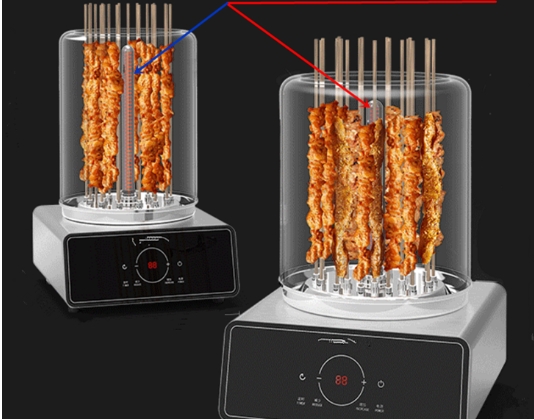
Ever notice how some steaks have that incredible, charred crust while others just look… gray? Or how a pastry can be golden brown on the outside without being dried out into a cracker? That’s all about the Maillard reaction. It’s a finicky process that only happens in a very specific temperature window. If your oven spends too much time idling in the middle, you end up cooking the life out of your food before the surface even starts to brown. That’s why we use shortwave infrared (IR) lamps. Instead of waiting around, these lamps hit the food with a burst of radiant energy. You get that browning in seconds.
Why “Instant” Matters
Most ovens just heat up the air and hope for the best. It’s slow. It’s clunky. Our IR lamps are different. They send electromagnetic radiation straight into the surface of the food. This gives you a level of control that’s almost surgical. You can spike the heat to get that caramelization exactly when you want it, then kill the power the moment it’s done. There’s no “thermal lag”—meaning the heat stops when you tell it to.
The Nitty-Gritty on Hardware
We build these things with high-purity quartz glass. Why? Because rapid heating and cooling is brutal on materials, and this glass can take the shock without cracking. For the heavy-duty kitchen setups, we focus on the wattage-to-length ratio. It sounds technical, but it just means the heat is spread evenly across your tray so you don’t end up with one burnt corner and one pale spot. We also use halogen gas fills to keep the filaments from burning out too quickly. And the best part? They usually use R7s or similar snap-in connectors. You don’t have to mess with the wiring or tear apart your machine. Just pop out the dead tube, slide the new one in, and you’re back in business.
A Quick Heads-Up
Here’s the thing: high-wattage IR lamps pull a lot of power and get incredibly hot. If your oven’s vents aren’t up to the task, you might end up warping the housing or, worse, frying your control board. It’s a lot of concentrated energy. Before you swap in a higher-wattage lamp, just double-check that your cooling fans are actually spinning and clear of grease. It’ll save you a massive headache later.