
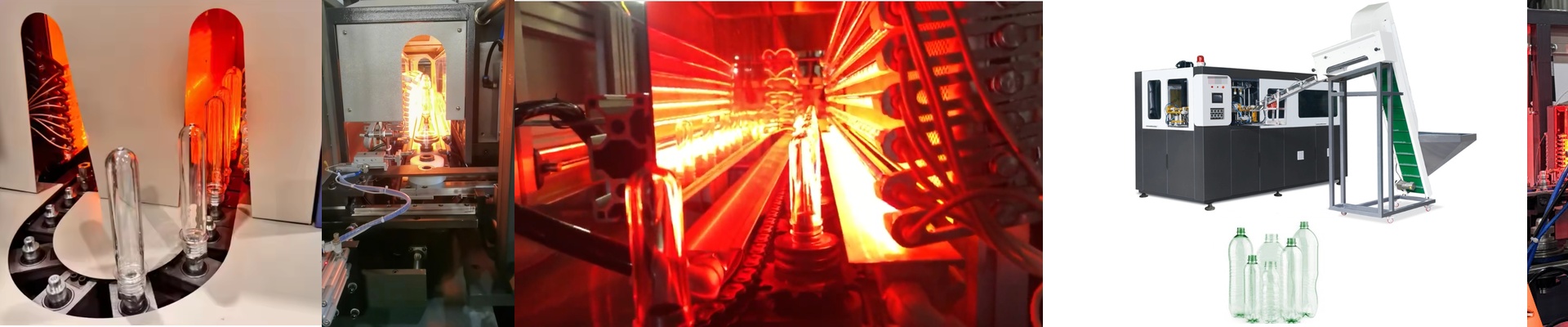
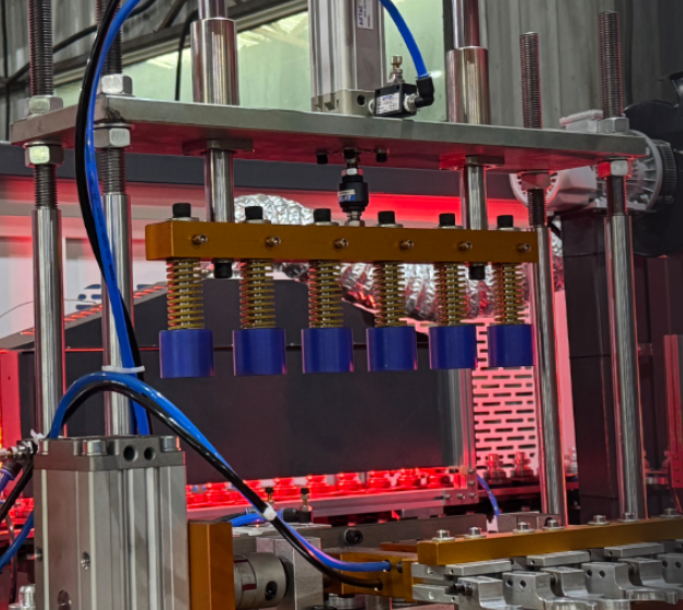
On the plant floor, a water bottle blow molder doesn’t sit idle. When the heating lamp starts underperforming, you know it immediately—preforms that never reach the right stretch temperature, wall thickness that drifts, and the machine slowing down while you chase rejects. The heating lamp isn’t an accessory. It’s the thermal heart of the stretch blow molding cycle.
What matters, technically
We build water bottle machine heating lamps around short-wave infrared halogen emitters, paired with quartz tubes that deliver fast response and stable output inside the heating tunnel. The geometry and power density are matched to the preform heating profile, so you get repeatable temperature distribution across the neck and body zones. Standard terminations are R7s connectors with industry-compatible mounting, and each lamp is specified for the voltage and duty cycle your blow molder is designed for. We use OEM-aligned materials and assembly, backed by in-process inspection and full traceability—so the lamp you get is the same design we run in our own retrofit kits.
Why it holds up in real PET water production
In PET water bottle runs, the heating window is tight. Our lamps come up fast, hold set-point stability, and recover quickly after door cycles—keeping cycle time consistent without cooking the preform. That shows up as fewer pinholes, better clarity, and less scrap. Energy use drops because the emitter puts heat where it’s needed, with minimal waste. And because the lamp is built to OEM tolerances, you spend less time on changeouts and more time on uptime.
The things you learn the hard way
These lamps are sensitive to surface temperature and airflow. Install them with the right clearances and verify reflector alignment—too little space or a misaligned reflector will drive uneven heating. They’re also polarity-aware and need stable voltage. Spikes and out-of-spec supply will shorten life. If your blow molder runs 24/7, plan replacements during scheduled maintenance windows, not when you’re in an emergency stop. We provide full fitment guidance—voltage, connector type, and mounting dimensions—so you can match the lamp to your machine without guesswork.