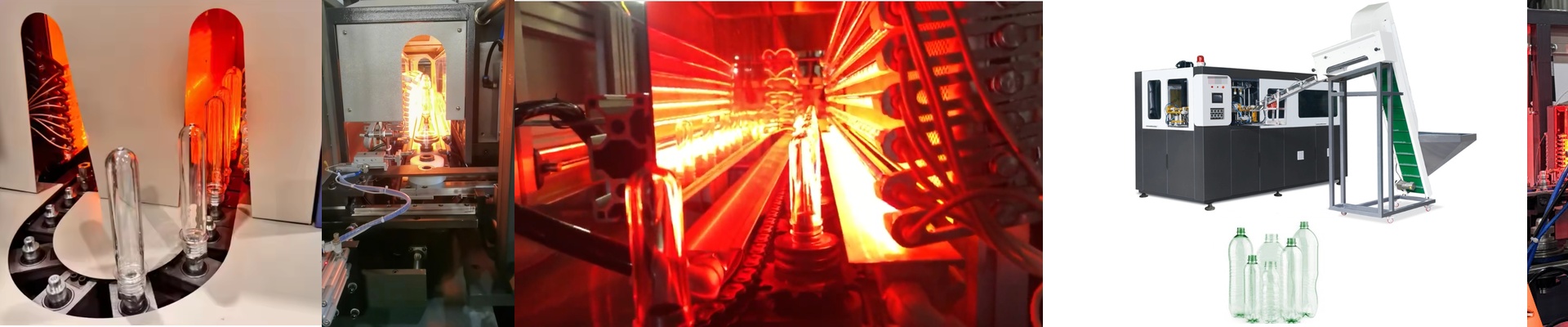

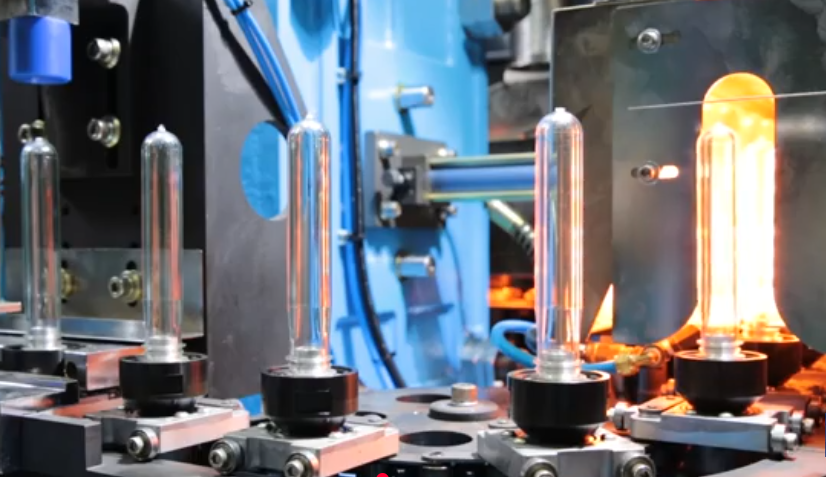
Out on the line, a Husky stretch blow molder doesn’t have room for uneven preform heating. When an IR heater in the heating tunnel starts to drift, you know it right away—streaks in the bottle, weak biaxial orientation, and scrap counts that spike. Downtime piles up fast. We carry Husky hot runner IR heater element spares built to original spec, so the replacement goes in clean and you get back to stable cycles without guesswork. What matters under the hood These are short-wave infrared emitters—quartz halogen lamps, for the most part—chosen because they respond quickly and hold tight temperature control during preform heating. We match Husky part numbers exactly, with the right wattage, voltage, and lamp geometry so the power profile fits the reflector and the heating zone. You need consistent spectral output, stable resistance cycle after cycle, and a filament design that can take the jolt of rapid on/off duty. The leads and connectors are machine-specific—often R7s or proprietary terminal blocks—so installation lines up without hacking anything. Why this matters on a PET blow line In stretch blow molding, preform heating is the gate to repeatability. When you drop in a spec-matched IR heater, you restore the intended heat profile. That keeps wall thickness even, helps you avoid crystallinity problems, and supports the line speed you’re chasing. Rejects drop because you’re no longer fighting overheated shoulders or underheated body sections, and temperature drift stops eating your setup time. Energy use falls, too—the element hits setpoint fast and holds steady, so you’re not wasting power on overshoot. A few shop-floor pointers Installation is straightforward, but alignment is not optional. If the lamp sits off-center in the reflector, you’ll get hot bands and cold bands, and the preform will show it every time. Before you order, confirm the connector type and polarity. When the lamp goes in, check seating and inspect the reflector—pitting or soot will rob you of output. Plan replacements during scheduled maintenance. These run hot, so let everything cool down and handle the lamp with clean gloves. That simple step prevents hot spots and keeps you from shortening the life right out of the new part.